More Than a Photo- Why Telling Conservation Stories Matters
Throughout the Shenandoah Valley, conservation is taking place everywhere and on every scale. Couples restore vernal pools on a few acres, so salamanders have a safe place to breed. Farmers improve streambanks and grazing practices to keep waterways healthy. Land trusts permanently protect forests and fields, while park rangers safeguard the mountains that define our landscape.
Yet much of this work happens quietly.
Most people drive past conserved farms without realizing they are protected forever. They paddle rivers without knowing the effort it takes to keep those waters clean. They hike through forests without meeting the people who dedicate their lives to caring for them.
During the last three months of my fellowship with the Shenandoah Valley Conservancy, I’ve had the privilege of meeting many of those people. Every landowner, volunteer, scientist, and conservation professional I’ve spoken with has shared a different story, but they all have one thing in common, a deep love for this place.
As someone who has lived in the Shenandoah Valley my entire life, these conversations have changed the way I see home. They have also made me realize something else. Conservation isn’t just about protecting land; it is about helping people understand why that land matters in the first place.
Stories are what make that possible.
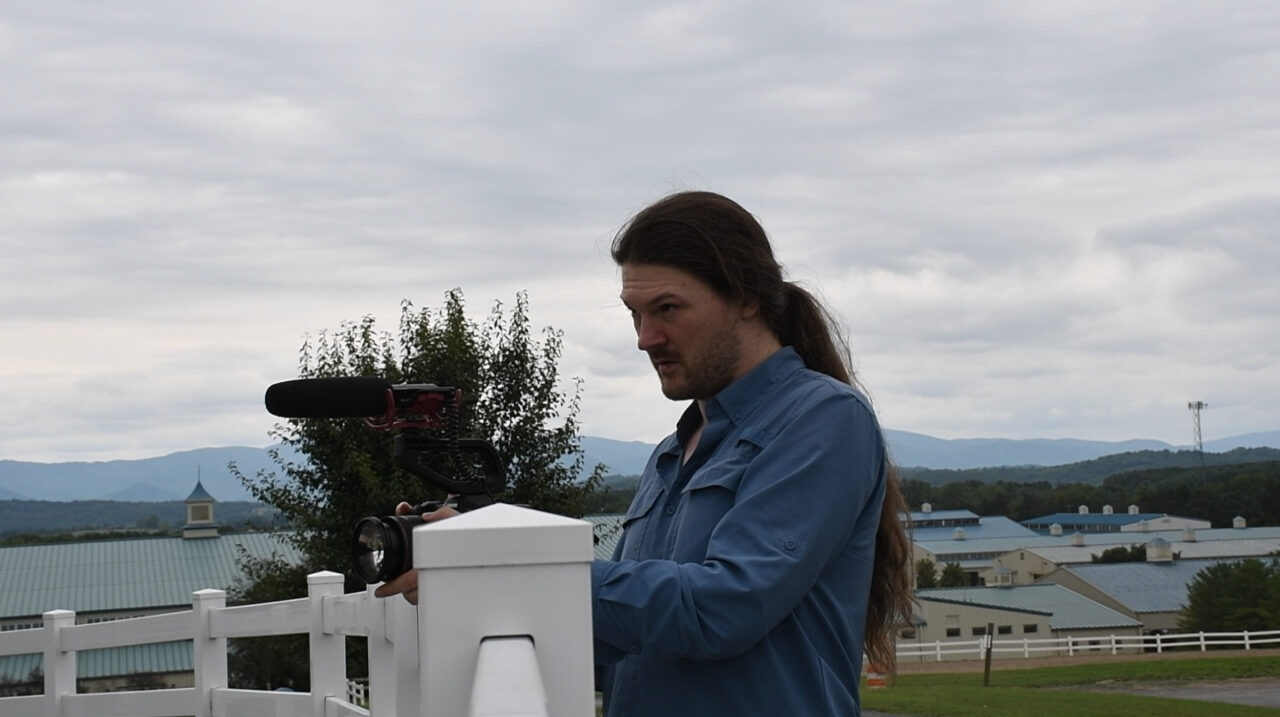
Meet Billy Morgan.
As a local photographer, videographer, and storyteller, Billy helps tell the stories that often go unnoticed. Through photographs, films, and interviews, he captures not only the beauty of the Valley but also the people who have devoted themselves to protecting it. His work gives conservation a face. It transforms scientific reports into personal stories and reminds us that every protected property represents someone’s commitment to the future.
For Billy, storytelling has never been just a job, it has been a lifelong passion.
“I made my first film with a VHS recorder, like a JVC recorder, when I was eight,” he said. “Then I just made documentaries my whole life.”
That childhood interest eventually became a career. Billy sold his only car to buy a professional camera.
“Two weeks later I was working on Untamed for PBS.”
His work soon took him far beyond Virginia, filming expeditions in some of the world’s most breathtaking places, even briefly working in Alaska.
For many people, opportunities like that would make it difficult to return home. But the Shenandoah Valley never stopped calling him back.
“I grew up in the Shenandoah Valley, and then I traveled the country for a few years,” Billy said. “And there is just no place like it.”
Coming home wasn’t simply about missing the mountains. It was about protecting them.
After reading reports on the declining health of local waterways, Billy felt compelled to return.
“I grew up playing in the Shenandoah River, swimming in the streams, fishing,” he said. “There was no choice. I had to come here.”
That decision inspired a years-long documentary focused on the Valley’s water health, but it also shaped the work he does every day.
Whether he’s heading into the field, interviewing landowners who have placed conservation easements on their properties, or documenting local wildlife, Billy is doing more than recording moments. He’s creating a connection between the people doing the work and the people who may never see it.
He believes stories have the power to bridge that gap.
“There’s a lot of people doing good work,” he said. “Helping tell their stories is a really great way I can help their cause.”
In conservation, success is often measured in numbers and quantities. Acres protected, miles of streams restored, or species recovered. Those numbers are important, but they rarely inspire someone on their own. What inspires people are the faces behind those accomplishments, the farmer who plants trees along a creek, or the family who chooses to conserve their land forever.
Billy also recognizes that conservation stories shouldn’t only speak to people who already consider themselves environmentalists.
“I want to tell stories that might draw people in who might not necessarily consider themselves conservationists or even into nature,” he said. “I want to draw people in and help them realize it doesn’t matter if you consider yourself a conservationist. Clean water affects everyone.”
That perspective is especially important in a place like the Shenandoah Valley, where conservation depends on collaboration. More than ninety percent of Virginia’s land is privately owned, meaning the future of the Valley relies on partnerships with landowners, farmers, businesses, and communities from every background.
Billy believes those conversations begin by finding common ground.
“Sometimes stories are told in a way that isolates a group of people because they expect that group of people to respond in a certain way,” he said. “Everyone connects with nature in some way.”
Rather than telling people what they should believe, Billy prefers to be upfront with his audience.
“Approach it in a way that people aren’t immediately turned off by the idea, you just have to tell the truth.”
“I definitely have a moral responsibility,” he reflected. “I got to experience spending every day in the rivers and streams. I want my children and their children to experience that someday.”
For Billy, a camera is more than equipment. It is a way to preserve memories, document change, and encourage people to care about places they may have overlooked.
“I’m in the unique position to be able to make something that people might take very seriously.”
Conservation isn’t only happening in forests, fields, or streams. It is also happening through conversations, photographs, and stories. Every interview, every image, and every video has the potential to connect someone with this place in a new way.
The Shenandoah Valley has no shortage of people working tirelessly to protect it. Scientists collect data. Stewardship staff monitor conserved properties. Landowners make the remarkable decision to protect their land forever. Volunteers give their weekends to restore rivers and forests.
Those efforts deserve to be seen.
Because when people understand the stories behind conservation, they begin to understand that it isn’t just about saving wildlife or protecting scenery. It’s about preserving childhood memories of swimming in the river, ensuring family farms remain productive, protecting clean drinking water, and leaving future generations with the same opportunities we enjoy today.
Billy’s work reminds us that every conservation success begins with someone who cares enough to act, but it grows when someone takes the time to tell that story. In a valley defined by its people as much as its landscapes, those stories may be one of our greatest tools for conservation.